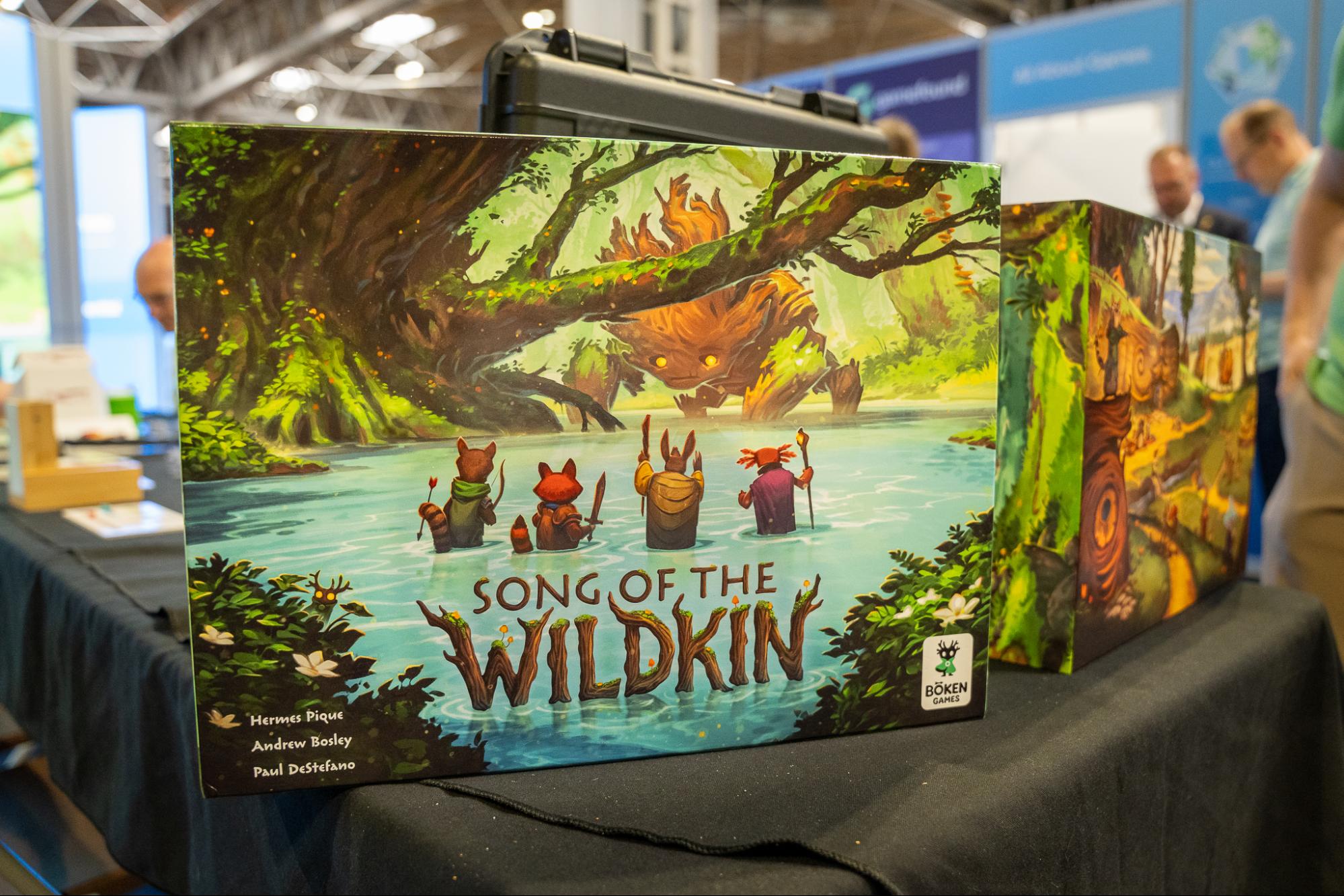
Designing for Epic Collaboration in Song of the Wildkin
Gil: Today we have Hermes from Bōken Games joining us for the Designer spotlight!
How did you get into game design Hermes, and what project/s are you working on now?
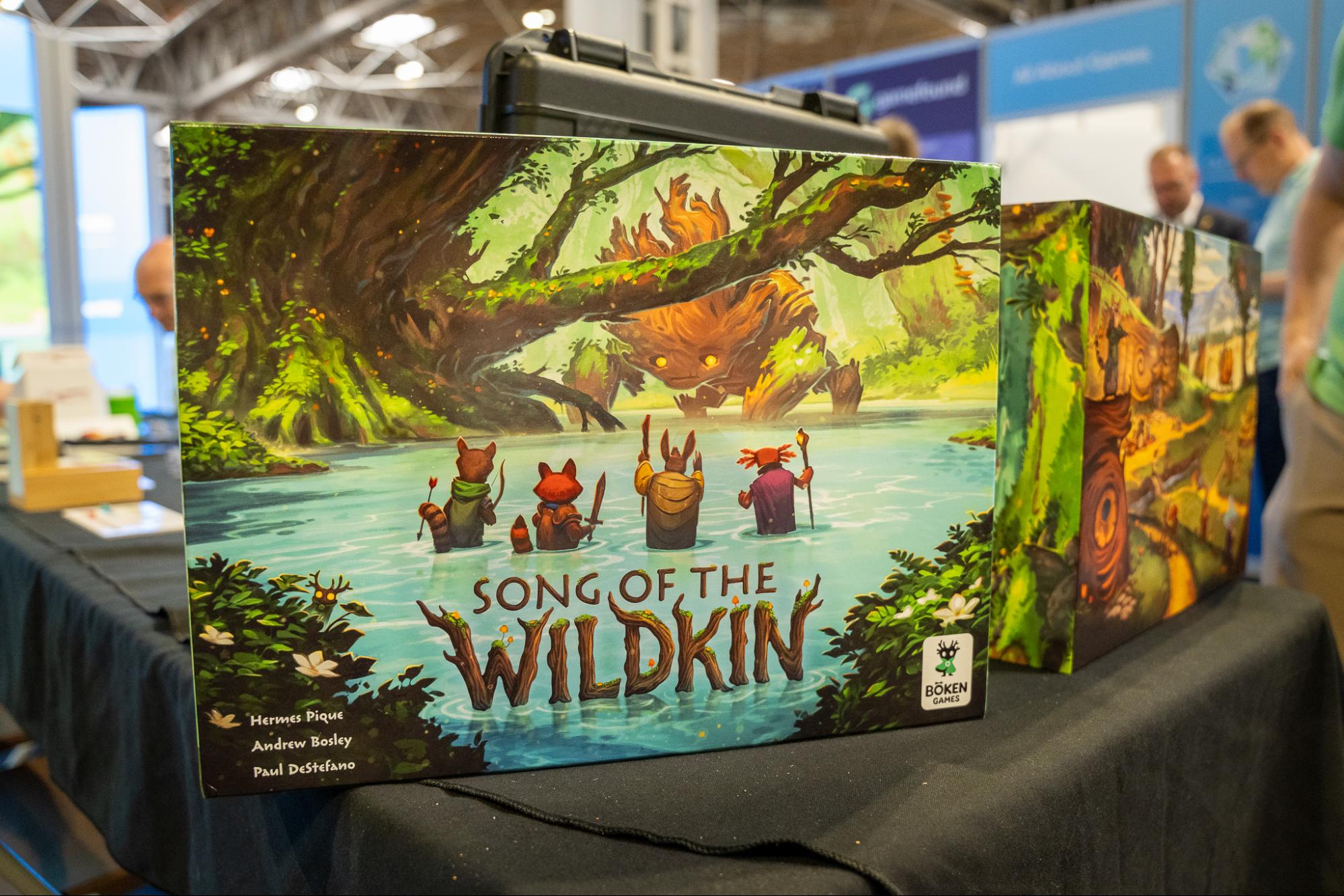
Hermes: Thanks for having me Gil! Song of the Wildkin is my first board game but not my first game. My background is in video games and after the birth of my son I rediscovered board games as a way to spend more quality time with my family.
Song of the Wildkin came about because I wanted to play family friendly epic campaign games and I wasn’t finding that in the market. So I pitched it to Andrew Bosley, the artist from Everdell, and Paul A. DeStefano, the writer from Oathsworn, and fast forward to now when we announced the game at UKGE and had hundreds of people try it.
Gil: Wow that sounds like a game I’d like to play right there! I’ve seen some of the art for this and it looks so incredible. I’m curious, what role does Dextrous have in your design process?
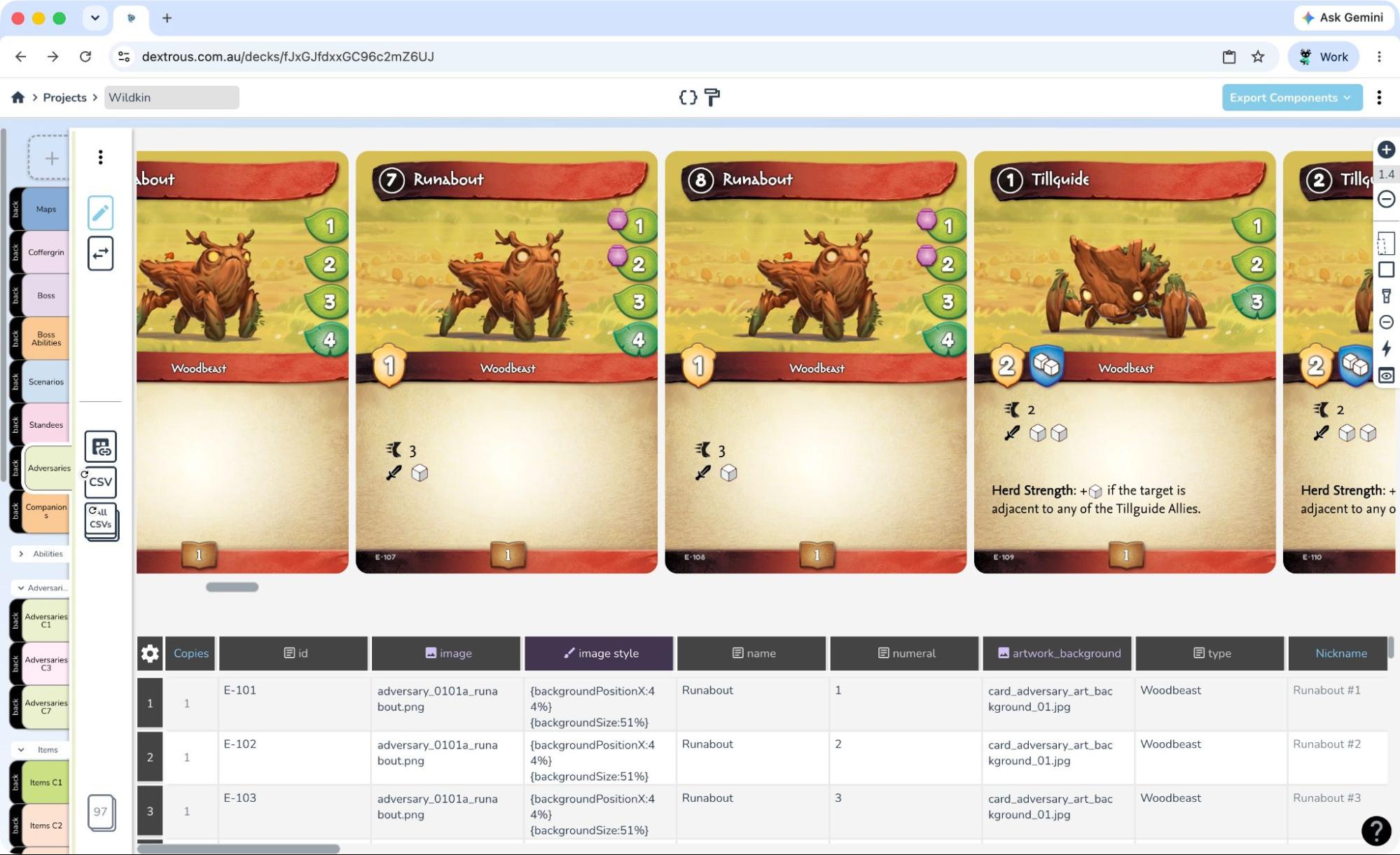
Hermes: I use it every day! Song of the Wildkin is a huge game, with 1000+ ability, adversary, item and map cards. By leaning into data merge and variables Dextrous helps me communicate components with the team at higher fidelity, as well as making sure playtesters have the latest and greatest content in Tabletop Simulator with just a click of a button. Also, the vast majority of the components we demoed at UKGE were printed from Dextrous!
Gil: Ok fantastic, that’s really good to hear you’re getting good use out of the app. So tell me more about Song of the Wildkin, there’s obviously a huge amount of heart and soul that has gone into this design. What inspired this? And what is the core experience you’re trying to give players?
Hermes: Song of the Wildkin is ultimately about bringing people together and working together towards a larger goal, and that is deeply ingrained into the gameplay and theme. The most obvious example is that you get to play as the bosses after you defeat them. This was inspired by my son, who wanted to mod CoraQuest, his first dungeon crawler, to play with the bosses instead. I thought, what would a game built around that look like? That, plus the desire to play a truly memorable campaign game with my family that feels fresh and epic, naturally led to Song of the Wildkin.
Gil: That's an awesome origin story! So tell me more about playing as the bosses. I don't think I've seen a game do that before and it sounds intriguing - what does that design space look like in practice?
Hermes: To me it goes back to the Mega Man games, where you get the power of the boss after you beat them. It’s certainly more common in video games than board games. In Wildkin, we went for chapters that are built thematically and mechanically around the boss. The mechanics and adversaries are all based on how the boss plays. So by the time you get to the boss, you have a sense of what you’ll face. And then we surprise you by building on top of what you learned to challenge you in different ways.
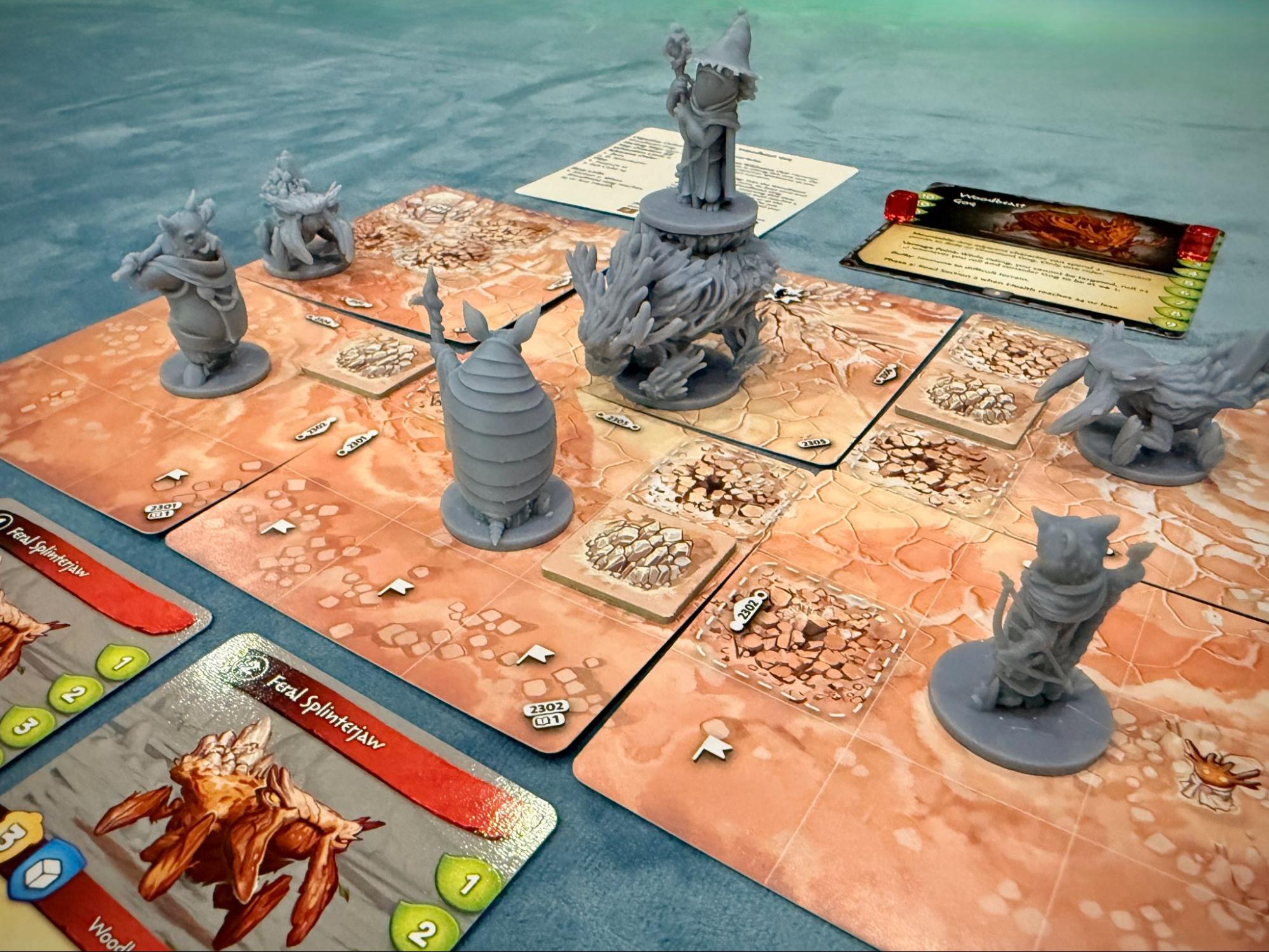
Mild spoilers ahead. For example, in Chapter 2, you face Draincrawlers, who charge at you and you have plenty of time to learn about that mechanic and how to work around charge attacks. The boss, Woodbeast Gog, also charges at you. The twist: you can ride Woodbeast Gog! So now the boss’s charge becomes a way for you to move as well. And if you enjoyed doing that, after you beat Woodbeast Gog you unlock it as a character, and anyone in your band can ride it!
Gil: Hey this sounds like a pretty great core loop. I love that you get to keep the Boss’s abilities as you go forward. That’s satisfying thematically too. Tell me more about the design space around these elements (turning enemies into friends, persistent new abilities etc.). What was particularly challenging from a design perspective and what interesting solutions did you find along the way?
Hermes: At a macro level the biggest challenge is designing for and around emergent gameplay. It’s a huge game! There’s 13 playable characters, 120+ unique items, 10 recruitable summons, and so on. Despite currently being the world’s most experienced Wildkin player, it’s not humanly possible to reason around all possibilities. So you build systems and processes to encourage players to solve problems creatively while catching extreme combinations that feel unearned or unfair. It goes from simple solutions like having databases of all character abilities and items that are easy to consult at a glance, to the brute force approach of thousands of hours of playtesting!
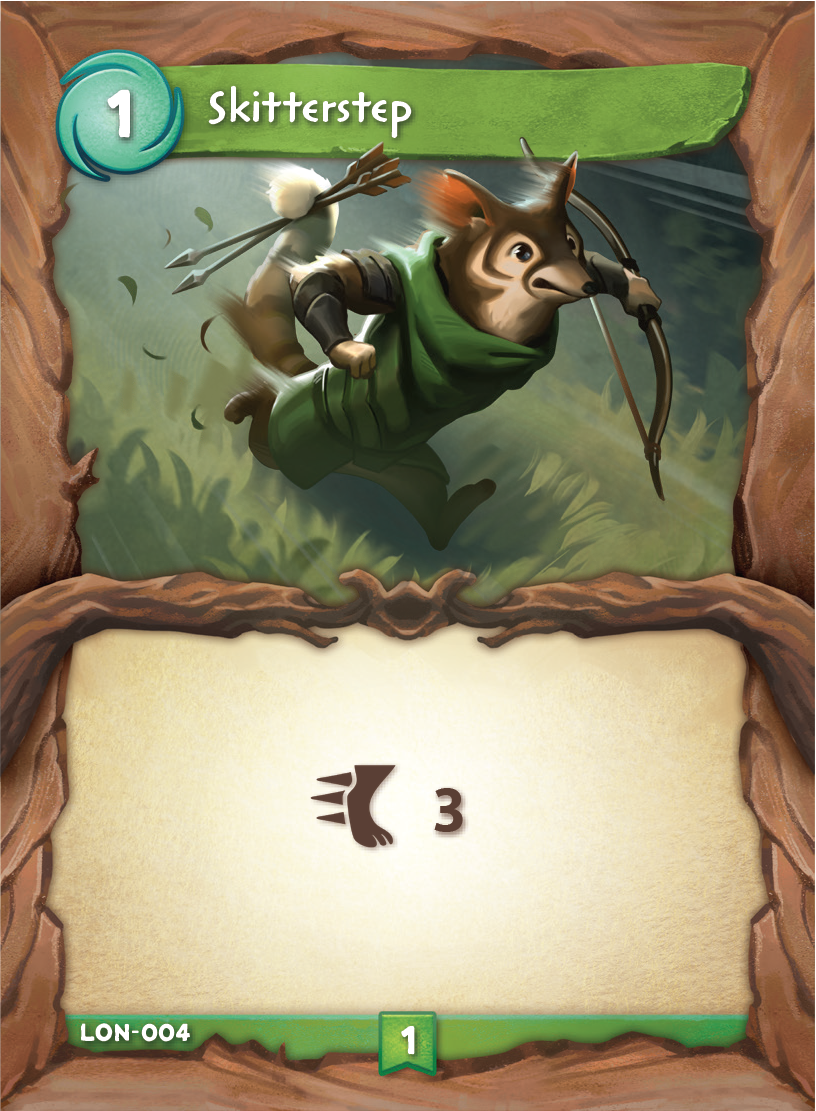
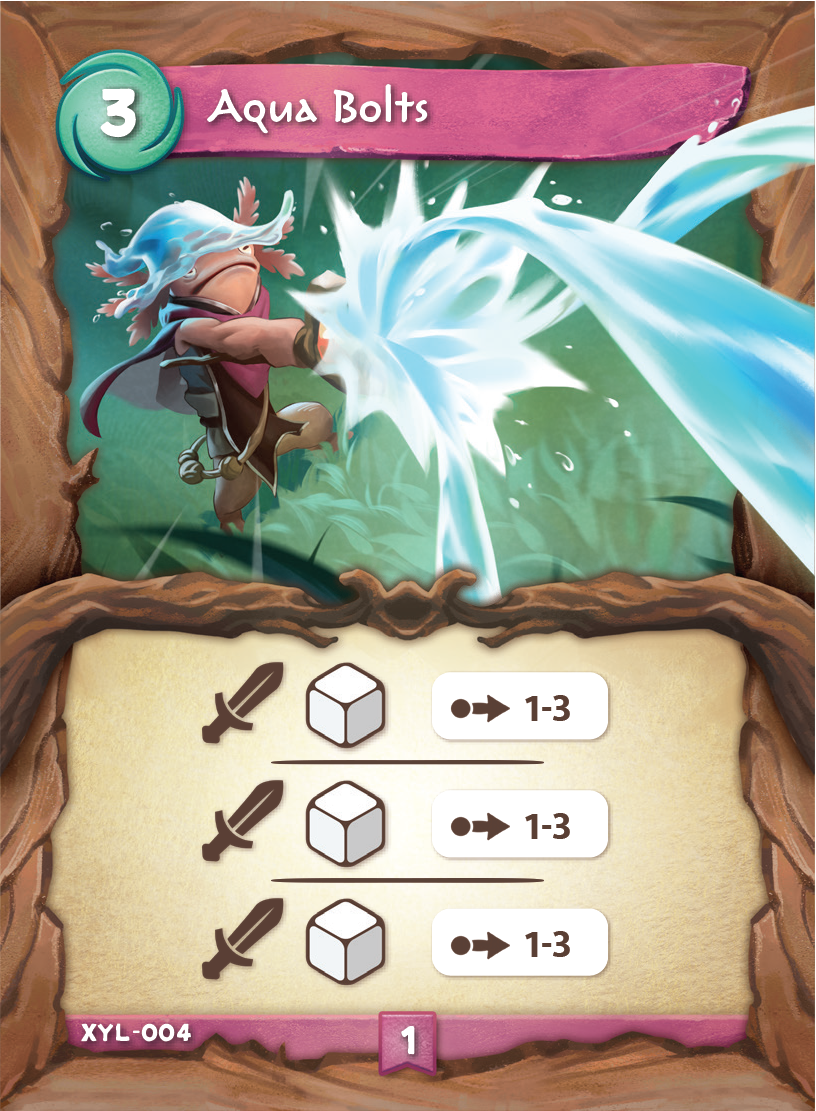
For the bosses in particular, it’s both challenging and inspiring to always start with: how does this mechanic in this chapter relate to the boss? Another interesting problem is the logic of the bosses. You don’t want handling the boss to feel like a chore. What is the simplest logic for the boss that makes for a memorable encounter while also giving players a feel of that character? The answer involves lots of iteration and chipping away any complexity that isn’t adding significant value.
Gil: Oh wow yes that is a huge game. It must be tricky to balance everything, but yes I think the database + many tests is the way to go for sure. So give me an example of this in action - how do you make an encounter memorable?
Hermes: In Wildkin there’s exploration scenarios and boss battles. For exploration scenarios, I walk backwards from how players could describe their experience. “We rowed a boat across a lake!” “We escaped a collapsing cliff!”, “We were betrayed!”. From those high concepts I explore multiple story and gameplay beats to incorporate across a 1 hour session. Those are things that are unlikely to be remembered, but keep the moment to moment gameplay interesting and build towards a climax. For the boat scenario, that includes a capsized NPC, an island with treasure, and eventually a massive swimming woodbeast that chases you. Then it’s about playing, refining and cutting stuff until it feels good, and repeating the process with playtesters until they consistently have a great time.
For boss battles, those that unlock playable characters, the high concept is the character itself. Like the rideable woodbeast we talked about before. There’s also story and gameplay beats to spice things up, plus meta surprises that play against player expectations from previous boss battles. Finally, I pay particular attention to balance. I want players to barely make it, so that there’s a tension release and their victory feels earned. I believe all of that contributes to how memorable a play session is.
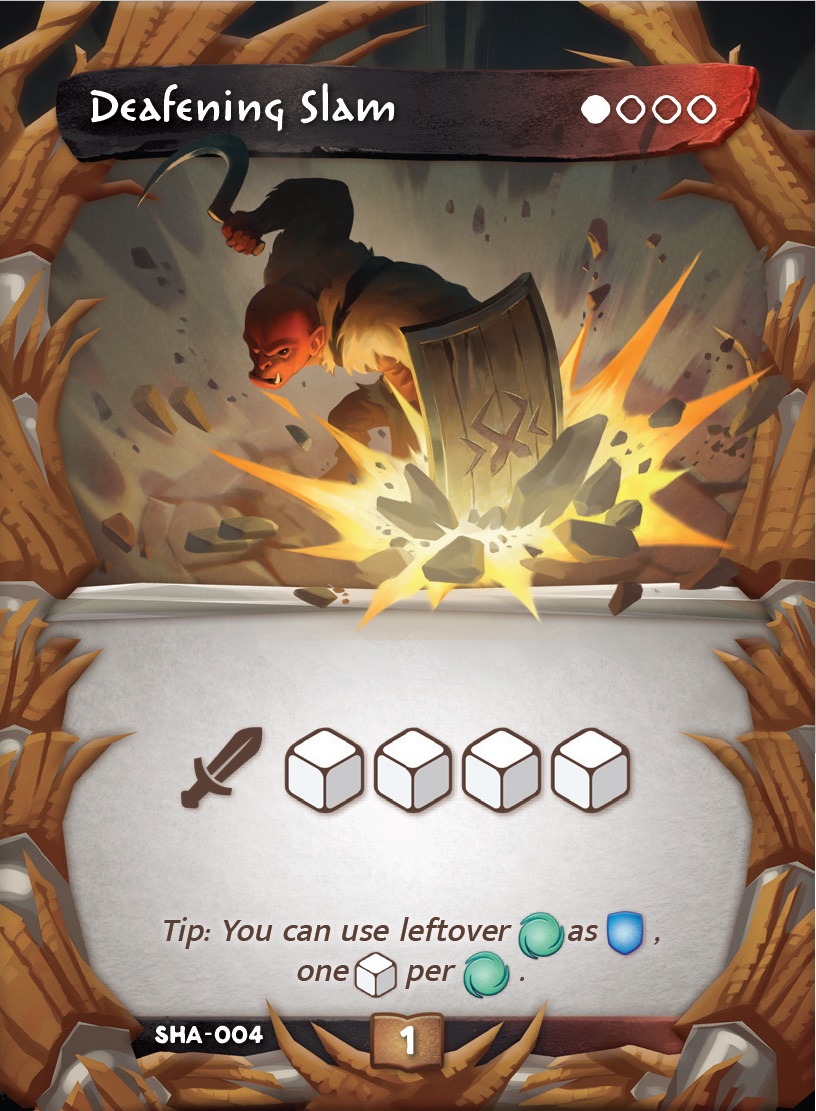
Gil: That sounds like a very cool design process. I love the idea of working backwards from a succinct story moment like “We were betrayed!”, this sounds like actually quite a good way of making the experience be memorable because that will flavour each little encounter and so on. In terms of keeping the tension and making sure victory feels earned.
What has been the most surprising or interesting aspect here in terms of playtester feedback? Like have you been surprised how much players do/don’t mind ‘losing’ or have you gotten any strong feedback about how the theme and tension work together?
Hermes: Wildkin offers two modes, Story and Challenge, and on top of that there’s difficulty modifiers. In Challenge mode, your health does not reset at the end of a scenario and you get exhausted if you take too long. The game appears to allow people to tune the tension to whatever is most enjoyable to them. Those who are seeking a challenge are finding it, and that’s validating, of course. And they’re not always whom I would expect!
Wildkin tends to bring together newcomers to dungeon crawlers/boss battlers and veteran players that want something new after Gloomhaven, Oathsworn or other epic campaign games. It makes me very happy when a newcomer plays with a veteran, usually couples, or parents with their children, and both have a good time.
Newcomers are the ones that surprise me the most, as they often get more enjoyment out of things I take for granted or play in very creative ways. For them everything is new. It’s a huge responsibility to be someone’s introduction to a genre, and I’m so grateful to be standing on the shoulders of giants and benefitting from decades of iteration on these kinds of games.
Gil: I really like the sound of players being able to pick their mode and also level of difficulty. One of my favourite video games Deep Rock Galactic does this, and I think it works really well because it lets players tune the experience towards their personality a bit.
One more question before the lightning round! What design choice are you most proud of in this game and why?
Hermes: Revealing the map, and story, as you explore. I want to surprise and delight players in every session, so we have 270+ beautifully illustrated unique map cards by Erin Wong (Tales of the Red Dragon Inn), all challenging or rewarding players in different ways.
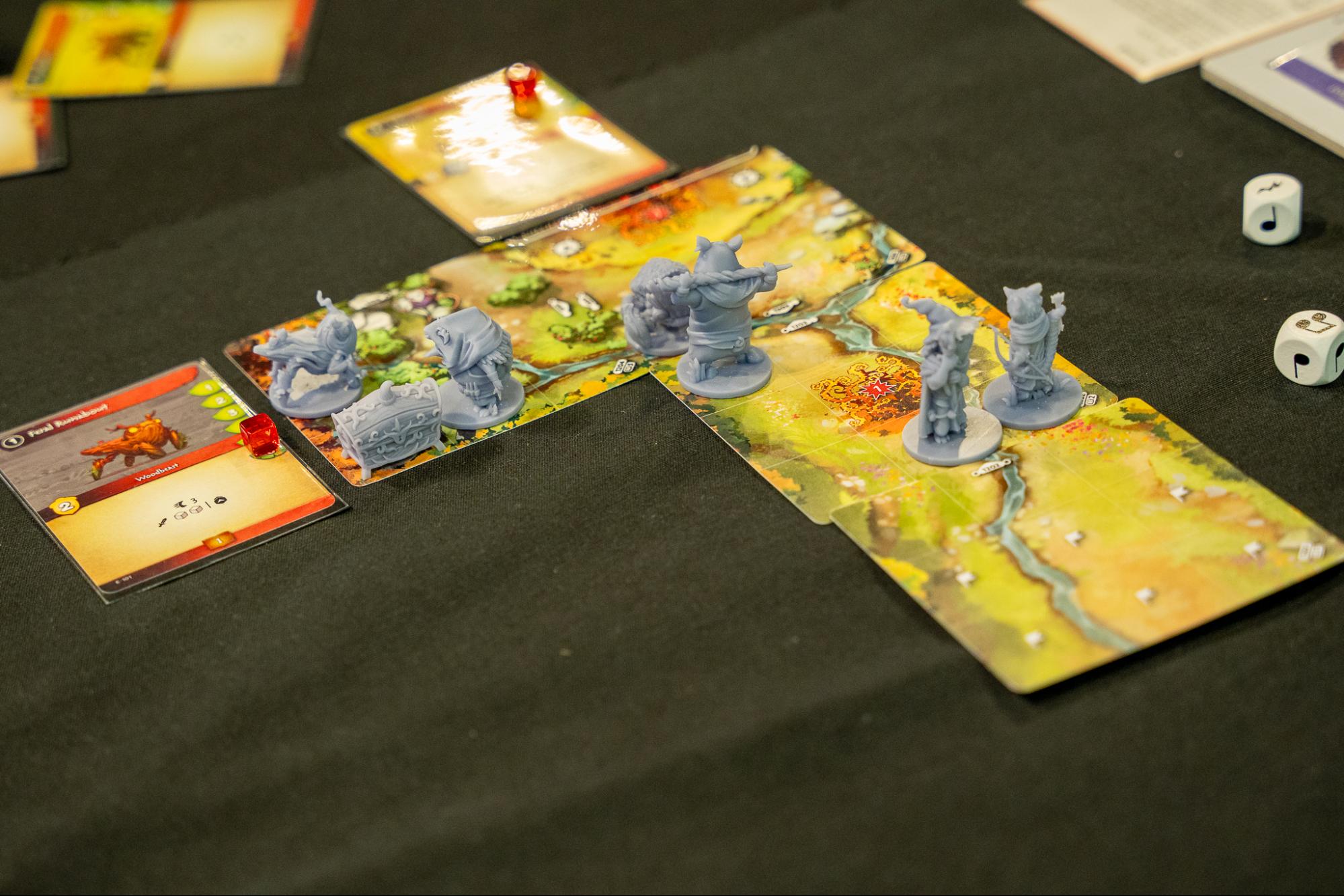
Every chapter is in a different location, and often we have wildly different locations within the same chapter. I feel this reinforces the sense of adventure and braving the unknown with your band of Wildkin, and tells players right away that we’re serious about giving them something truly special.
A design choice within this design choice is that every map has a hidden fairy, that gives a buff to the first player who sees it and says “Fairy!”. I designed that with kids in mind, but it gives me equal joy hearing adults passionately shouting “Fairy!”.
Gil: Ha that is so great. Yes I could see this special attention to detail, lore and worldbuilding straight away in the art and I’m sure my girls would absolutely LOVE spotting the fairies too. What a fun idea!
Ok on to the lightning round!
⚡⚡⚡ LIGHTNING ROUND! ⚡⚡⚡
- What’s your favourite player color?
Green.
- Theme or Mechanics or Experience? Which comes first?
Experience.
The theme brings you in, the mechanics entertain you, the experience is what stays with you.
- If you had to pitch your game in 3 emojis, what would they be?
🪵🎵⚔️
- Which game in your game collection would you take to a desert island?
Today, it would have to be Slay the Spire: The Board Game.
- Choose 3 adjectives to describe what you like about game design. What are they?
Payful, Collaborative, Emergent.
- If your game was a weather event, what would it be?
Spring.
- Which game mechanic would be most terrifying if it happened in real life?
The one we have: permadeath.
- If you had to make a game in one hour, what would you pick as the core mechanic?
Maze.
- What game will you still be playing when you’re 90?
Slay the Spire 7. Assuming 10 years between each release.
- What’s your favourite drink to have while gaming?
Cinnamon tea.
Gil: Thanks so much for joining me Hermes and I’m so excited for Song of the Wildkin - where can people go to find out more, playtest or hit up the Kickstarter etc?
Hermes: Thank you for having me Gil! Dextrous has made such an impact on Song of the Wildkin, and I greatly appreciate how responsive you are.
For people who want to know more, please join our newsletter or hang with us in the Discord or BGG. We’re targeting an early 2027 launch and your input can make a real difference on the game.