Finding Fun and Unique Design in Dungeon Trash
 Gil: Hey Taylor, welcome to the Dextrous Designer spotlight!
Tell us about yourself as a game designer - what kind of design space do you like to work in?
Taylor: Hello Gil, thanks for this opportunity to share some of the behind the scenes. When designing games I like to focus on 2 main goals: facilitate opportunities and unique gameplay. The opportunities I am trying to facilitate are fun times, bonding between players, learning about a topic, those types of things. As for unique gameplay, I want to design games that break the norm, games that people play and say “I’ve never played anything else like that.”
Gil: Hey I love that! So do you think fun times and unique gameplay inform each other? Can you give me an example from the current game you’re working on? It does sound super unique so I’m keen to hear more about it.
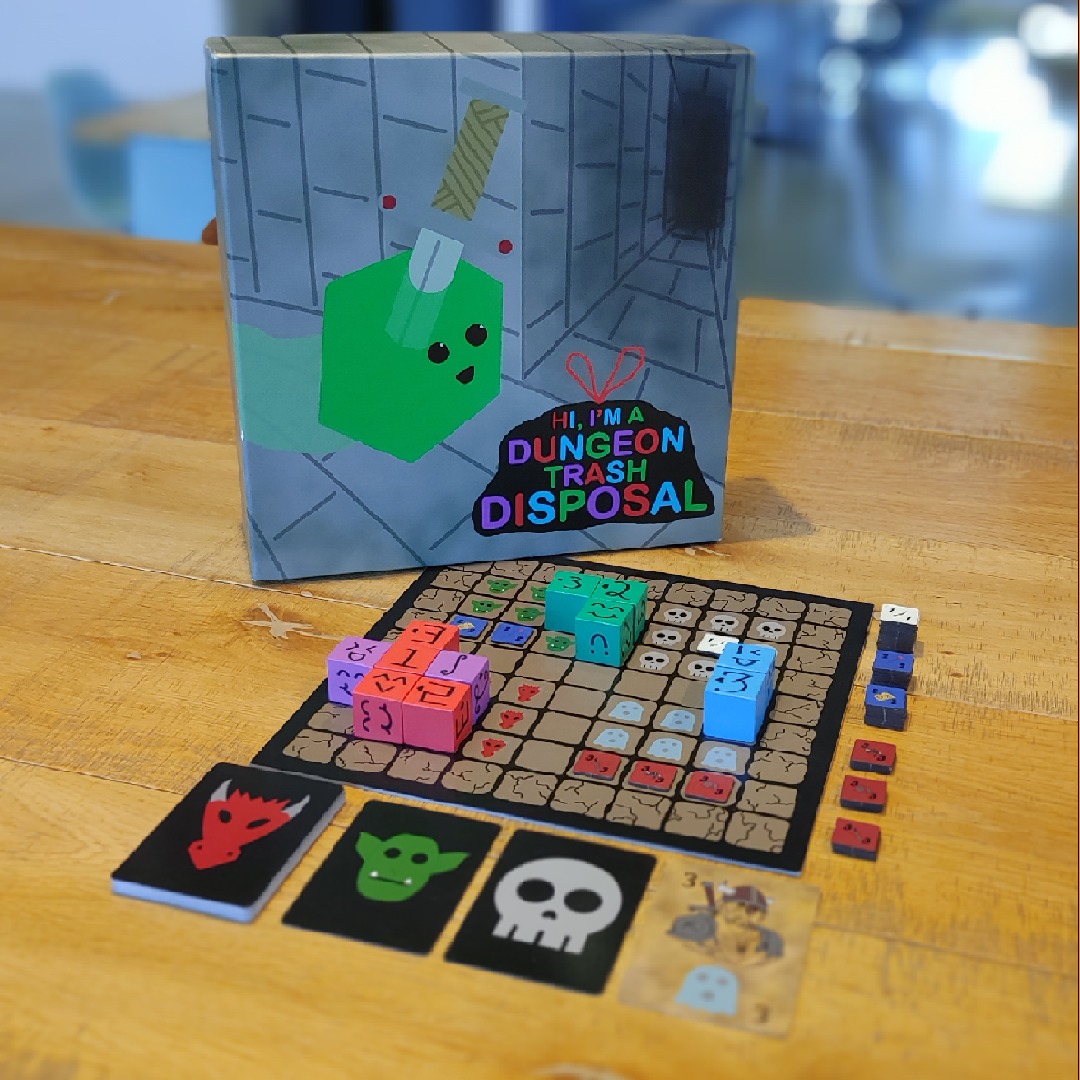
Taylor: Unique gameplay does not always equal fun, I’ve had my fair share (both designed and played) of unique but boring mechanics. But when you find something both fun and unique, people want more and will come back for it. In my game “Hi, I’m A Dungeon Trash Disposal” players are Slimes that get bigger as they pick up trash. Everyone’s favorite mechanic is being able to physically push one or more chunks of another player off of them and steal it for themselves (along with the trash inside).
In what other game can you physically push 1 to 9 pieces of another player off of their core and run off with those pieces now attached to you? Not only is it satisfying in concept, but the action is fully tactile, you are actually shoving pieces around a board to steal them as your own. This creates a unique gameplay that brings many different types of players together, all on equal footing, playing a game they enjoy.
I’ve had all ages and types of players, from strategic grown-ups to chaotic youth play this game with the same reaction- wanting to play again and share it with anyone nearby that they can get their hands on.
Gil: That does sound fun! It sounds like you've got a good mesh of the theme and tactile experience there too which is excellent. Can you tell us a bit about the design journey of this game? How did you come up with the idea? How did you prototype it and improve it? How did you know it was finished?
Taylor: One of my favorite questions to answer about the game is how I came up with the idea - I was trying to make a completely different game. The more I thought on that game, the more I discovered the core concepts of this game.
My prototyping started out as a hand-drawn board on notebook paper. The cards did not exist (there was a different system for trash dropping) and the cubes were wooden cubes I hand-painted into the 4 different colors and wrote on with marker. I later discovered Dextrous and have used it to prototype (and even complete) every card I’ve designed since.
Early on in the playtests I had 2 major suggestions that would dramatically improve the game, make a smaller board and give some indication of where the trash would be coming in future turns. Originally, the board was much larger and each turn the trash was random. By changing these 2 aspects, players had more interaction and deeper strategic choices.
I fall into the category of “never finished” because I am the kind of person that would like to always find something to change, instead of “finished” I recommend determining when your game is “ready.” How did I know it was ready? Mostly by the feedback I received from my players. When I had way more genuine “I loved that and want to play again” than requests or suggestions for changes, I felt confident moving forward. I also noticed once I reached that point, most of the suggestions I received were suggestions that attempted to fix hypothetical problems/situations that did not exist (based on my playtests).
Gil: Ha so it’s almost like this game interrupted your other design and was like, ‘hey make me instead!’. That’s interesting too about the smaller board making it feel more interactive, and letting players plan ahead. It’s great to have players excited about the game and wanting to play again too! So what would you say mis the design choice you’re most proud of in terms of its impact on player experience?
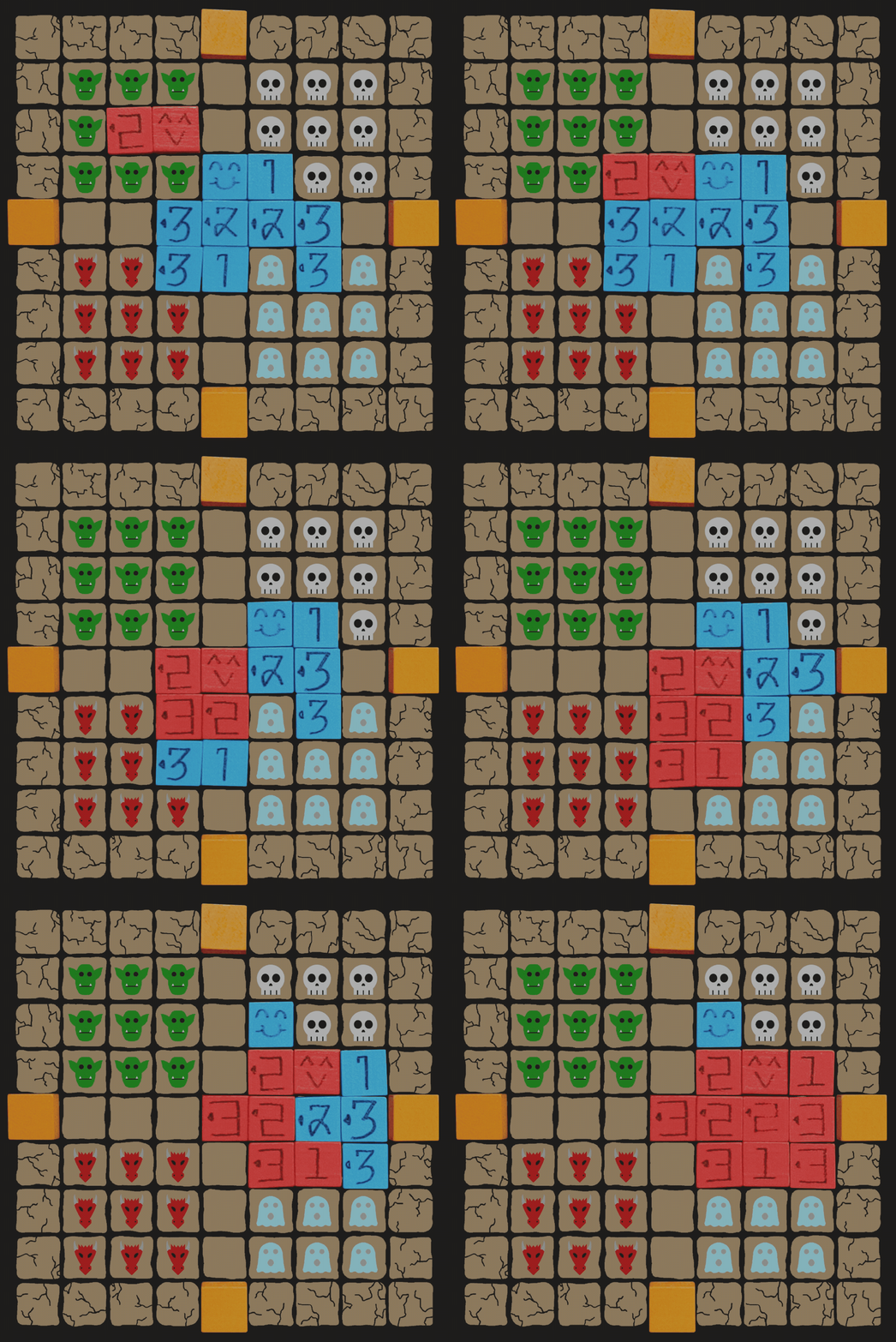
Taylor: Besides the change in board size and allowing players to plan ahead, the other most important decision that impacted gameplay was how players can steal from each other. The first method is for a player to literally run away with a piece of another player. However, there are times where this is not an option (not enough room on the board, a player has wedged themselves strategically into a corner, etc).
Creating a second method for stealing by absorbing a piece(s) off of a nearby player keeps the interaction going in these cases. There was also the addition of the rule that when absorbing a piece of another player, the trash inside that piece loses some of its durability. This ensures the game always progresses, and doesn’t stall out when players are taking actions to steal from each other rather than securing their points and ending the game.
Gil: Ok that sounds like a good move - keep things moving and dynamic and interesting for players right up until the finish. Speaking of finishing Taylor, I want to say thanks so much for joining me and for sharing some of your unique journey here with this game! It’s been great. Where can people check out Hi I’m a Dungeon Trash Disposal and find out more?
Taylor: Currently the best place to check out the game is on its Kickstarter page (Live now through April 1st): 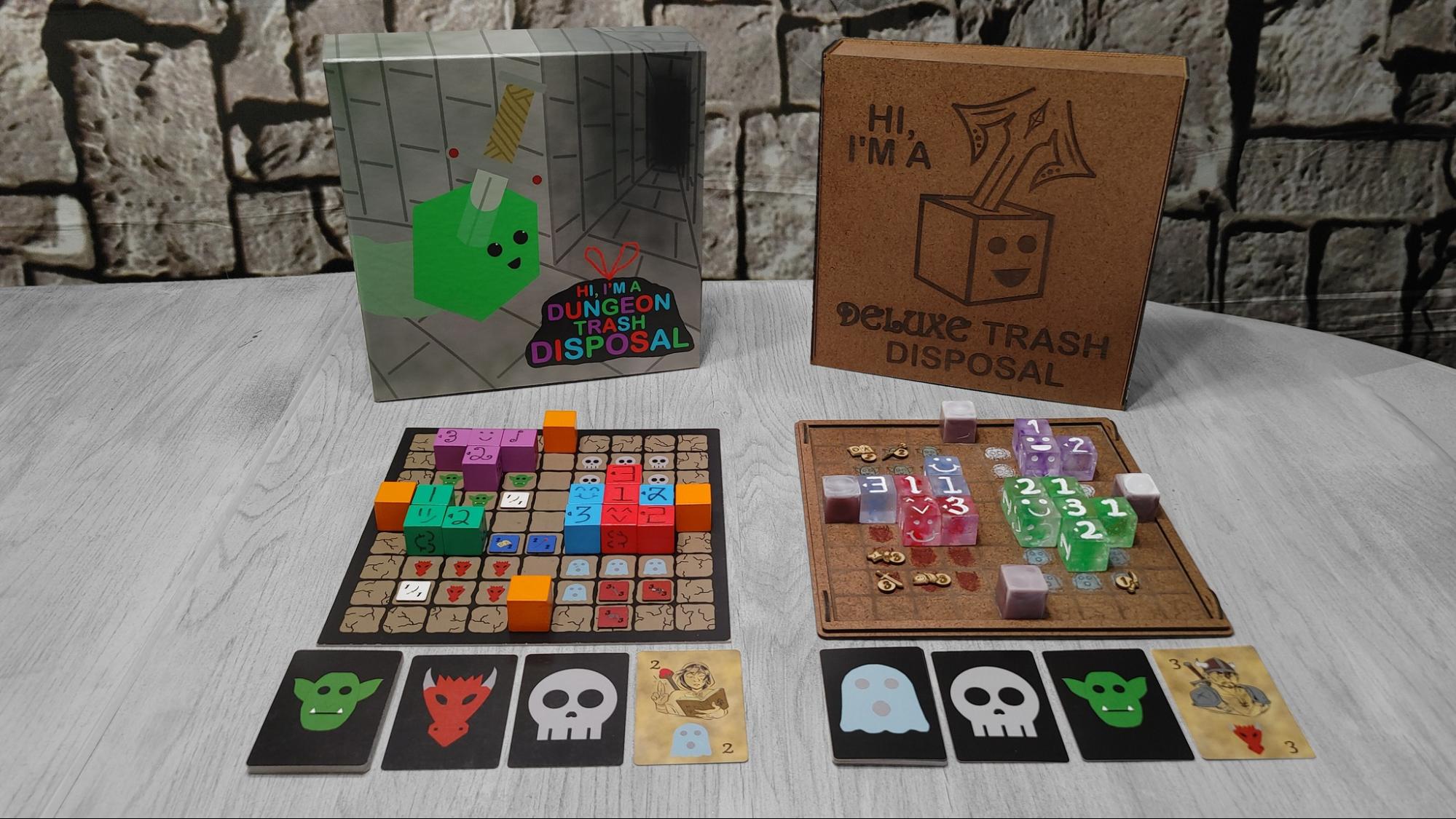
Gil: Ok brilliant, thanks again for joining me Taylor, and I’ll see you on the flip side!
Taylor: Cheers!