Prototyping Jurassic Crisis
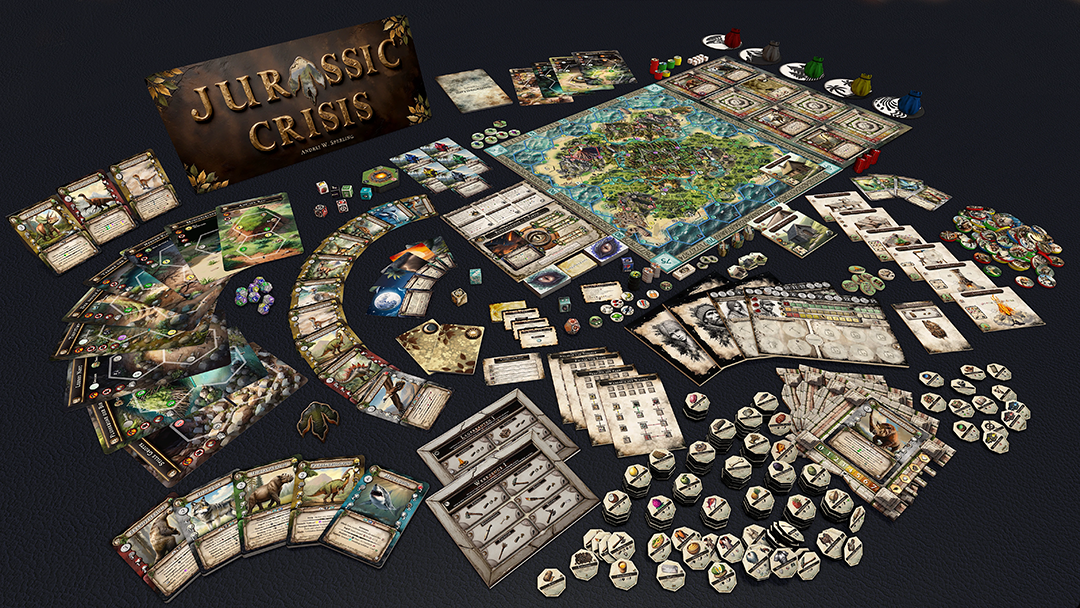
Gil: Hello and welcome to the Dextrous Designer spotlight! Could you introduce yourself, how you got involved in game design?
Andrej: Hello Gil, thank you for taking the time for me! I’m Andrej Sperling, a passionate game designer from Germany. I specialize in exciting and innovative survival board games and have been designing and developing games since 2018.
My inspiration comes from my love of video games, especially ARK: Survival Evolved. I wanted to bring that survival experience to the tabletop and share it with board game enthusiasts. I also wanted to embrace the challenge and see where it would take me, while being productive again and using my creativity, which had faded into the background over time.
As a child, I drew, developed, and even printed my own games and card games 😃 and I realized I could continue this hobby as an adult. This year, I decided to take it professionally.
Gil: Wow that sounds like you’re quite deep down the rabbit hole of game design already Andrej! So when you say ‘survival board games’ what do you mean exactly? As someone who’s never played ARK, I’m curious - what draws you to these kinds of games? Do you plan to continue this specialisation on a professional level?
Andrej: Survival is actually a pretty broad term. In the kind of games I make, and in the computer games that inspire me, it’s all about starting in a situation where the player basically has nothing. You land almost naked in an environment and have to make something useful with the resources the world or the place gives you. Usually, it starts with gathering basic things like stones, wood, and fibers. From that, you can quickly craft something like an improvised stone axe.
.webp)
On top of that, you have needs that must be met: hunger, thirst… if those aren’t managed, even the best ‘gold’ won’t help you survive. 😃 What really draws me to these games is that every moment can be your last if you don’t gather enough resources and food. It’s about pure survival and then, over time, looking back and thinking, ‘Wow, I actually managed not to starve, and I didn’t get eaten or defeated by animals, creatures, or natives!’ 😃
I definitely plan to continue developing games in this area, because there aren’t many games out there that give me that same sense of thrill and challenge.
Gil: ‘Every moment can be your last’ - Love that. Ok I think I understand a bit better now, in terms of emotions it’s a bit of a ‘rags to riches’ feeling combined with constant tension of super high stakes. So tell us about your current design - how are you going about generating that thrill and challenge? And how does playtesting fit into this? Do the emotions of your playtesters affect the design decisions you make?
Andrej: In my current design, Jurassic Crisis, it’s exactly like that. Even when you’ve already reached that ‘millionaire’ stage, one wrong decision can ruin everything or sometimes Mother Nature herself shows no mercy.
.webp)
Then all you can do is pick up the pieces, lick your wounds, regroup, and figure out how to handle the new, unexpected situation. That’s the thrill for me. And against nature like hurricanes or meteor storms no one is ever really safe. 😃
But I also built in some chances for recovery: players can be revived, though only up to twice in a single run. It actually happened in playtests that a meteor struck directly on someone’s position and in that case, dinosaurs were the least of their problems! 😄 Everything was gone. You really need a good tolerance for frustration (which is part of survival games in general).
At the same time, I make sure there’s balance between loss and reward. For example, a meteor might destroy everything, but it also leaves behind metal ores and rare stones that players can grab. So there’s always opportunity mixed in with the danger.
.webp)
When it comes to playtesting, I’ve noticed something interesting: if a weapon or item feels too powerful and I decide to nerf it, players often react with skepticism or even negative comments at first. I watch closely but don’t change it back immediately. In most cases, they adapt to the ‘downgrade,’ and it works fine. That’s the tricky part with testing and early access titles, players get used to how something works, and if you change it too much, negative feedback can come quickly. 😃
Gil: That sounds super interesting. I really like the idea of balancing the loss and reward (with the meteor leaving behind metal ores and rare stones) - you did mention ‘run’ though - does that mean this game is a rogue-like or something? Does one run affect future runs? And yes I feel you on the playtesting front and the challenge of navigating changes - it’s tough for playtesters to accept change even if it ultimately makes the game better. So tell me about this ‘early access’ thing? What does it look like for Jurassic Crisis?
Andrej: Yes, that’s right. Jurassic Crisis is played over three sessions, and your progress carries over from one session to the next... your gear, chosen items, and even your tamed dinosaurs. So each new session begins with you better equipped and more capable of facing the dangers ahead.
Session 1 – The Struggle to Survive The game begins with pure survival. You start completely unprotected, without gear, shelter, or resources. Your first tasks are critical: find food, build a simple shelter, and, if you’re lucky, tame your first small dinosaur. This phase is all about surviving in a hostile, unfamiliar environment. After six rounds, this introductory session ends.
Session 2 – Building & First Goals By the second session, players should feel a little safer and start thinking more strategically. Now you’re collecting experience and victory points more efficiently. You’ll explore more dangerous areas, gather rare resources, and acquire the first artifacts needed to escape the island.
Session 3 – Final Conflict & Decision The last session is a turning point: conflict becomes unavoidable. Players have two options... either leave the island in time with three artifacts and enough points, or hunt down your opponents and eliminate them before they escape. This session becomes a tense strategic showdown, where resource management, tactical combat, defense, sabotage, and endgame planning all come into play.
And about the whole ‘early access’ thing it’s similar to video games, but in the board game world. With Jurassic Crisis, I’m giving players the chance to test and experience the game early, while it’s still evolving. Their feedback is super important for balancing, fine-tuning mechanics, and seeing how people actually play, not just how I imagine they will.
Gil: Ok wow so it’s almost like a 3 act structure. I can see how that would finish in some very tense showdowns! That’s a great point about the importance of watching how people actually play, not just how you imagine they will - theorycrafting can only get you so far. So with that in mind, can you tell us how Dextrous fits into your iterative process? How is it helping you do things faster?
Andrej: I actually discovered Dextrous earlier this year (2025). I’d heard it makes creating components and everything for board games really easy, but at first I didn’t dare dive in because I was used to doing everything with my simple tools. The truth is I kept wasting time on tedious manual work... changing an icon meant editing every single card by hand. It got exhausting and honestly pretty annoying. 😄
So I finally gave it a shot one evening: I watched the tutorials and started building my first components.
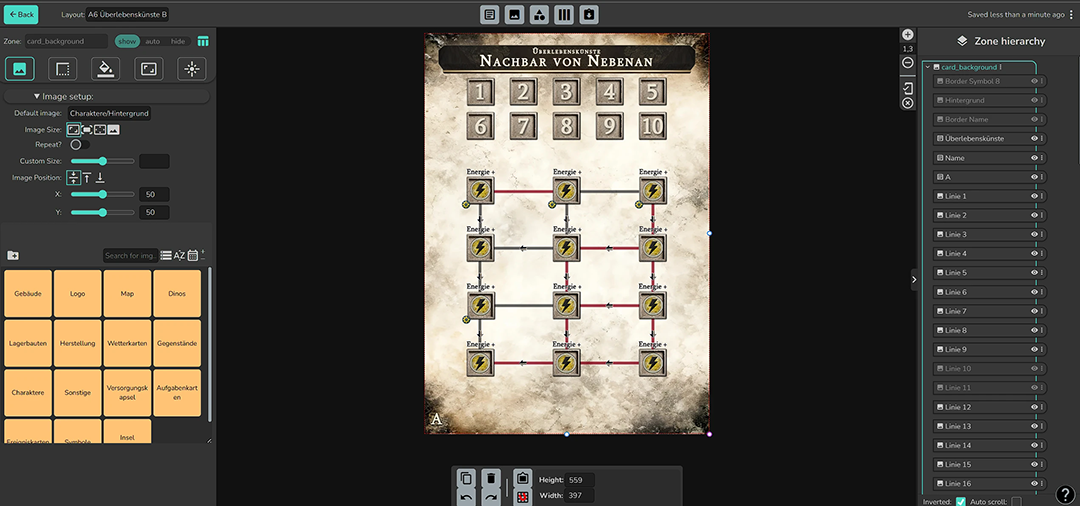
I could kick myself for not doing it sooner 😄 Dextrous was way easier to learn than I expected. With every layout and component I made, I liked it more and more, and now I can’t imagine going back. It took a while to transfer and set up all my existing components, but it was worth it. Now I can work a hundred times faster, edit and correct things with almost no effort. I’m part of your Designer program and absolutely satisfied, worth every cent. You’ve done an amazing job, and I’m excited for the next features!
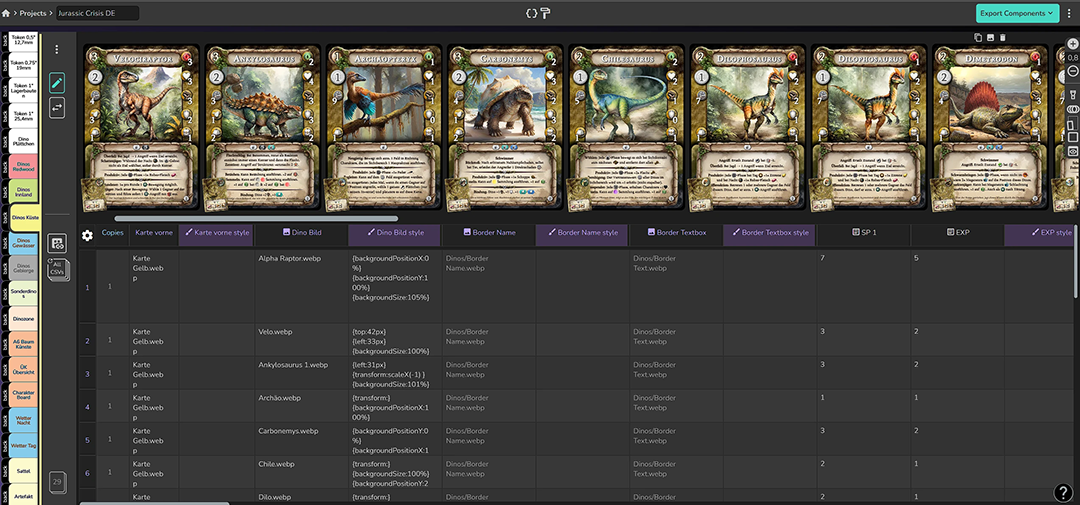
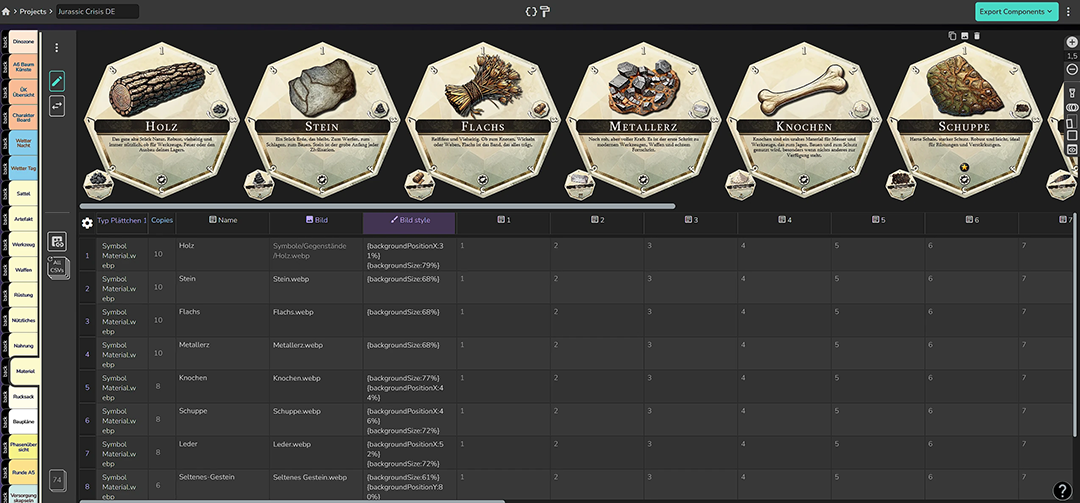
Gil: Ha I’m glad Dextrous is making a difference for you on that front! Can you tell us what your current prototyping pipeline looks like? Are there any tips you can share for new designers who are making a game like yours?
Andrej: The very first step for me is always imagining the concept, the mechanic, or a specific moment I want to create. Often I think about these things quietly at night, my productivity goes to sleep mode, and creativity kicks in. Anything interesting or important I immediately jot down. I think every designer should do this... every little spark of inspiration needs to be written down. Don’t make the mistake of thinking, ‘Oh, I’ll remember this amazing idea later.’ Maybe you’ll remember which movie was on at the time! 😄
Gil: This is so relatable. So many times I get ideas when I’m just waking up or just falling asleep, and yes, I never remember the ideas later if I don’t write them down either. So what do you do after you write the ideas down?
Andrej: I start turning the ideas into something on the screen. Some things I sketch on paper, but most of it I already do on the computer. I also sync all my notes with my smartphone, so I can access everything anytime. I have a tendency to make an idea look really polished immediately, the card or token, but I wouldn’t necessarily recommend that. 😄 Often it gets discarded or changed anyway, and time has passed. But for me, I need to feel it is almost ‘perfect’ in my mind to work with it effectively, even if the component will be edited many times. I love fine tuning and optimizing what already exists and works well.
.png.webp)
.webp)
In the past, I had to print materials every few weeks to test and improve them, so much time and material wasted! 😄 Today, I import everything directly into Tabletop Simulator and test it there. And with Dextrous, being able to import all components even entire decks directly as files into TTS is pure gold.
Gil: Yes, I've started doing the same thing. These days I’ll even try to test on an online platform once or twice in between physical prints, just to catch typos or any unexpected flow on effects from changes I’ve made.
Andrej: Exactly. When a new card is introduced, it might theoretically work fine, but it still has to be tested in the actual game. It’s not enough to just have a cool card with a cool effect... you need to see how it interacts with the game, whether it covers all rules, and whether it might be too overpowered. I usually create 2–3 new cards, put them straight into the game, and optimize them step by step. Often some effects aren’t clear or don’t cover everything, so I adjust the text to avoid misunderstandings. I call this ‘Languagramming’ ^^
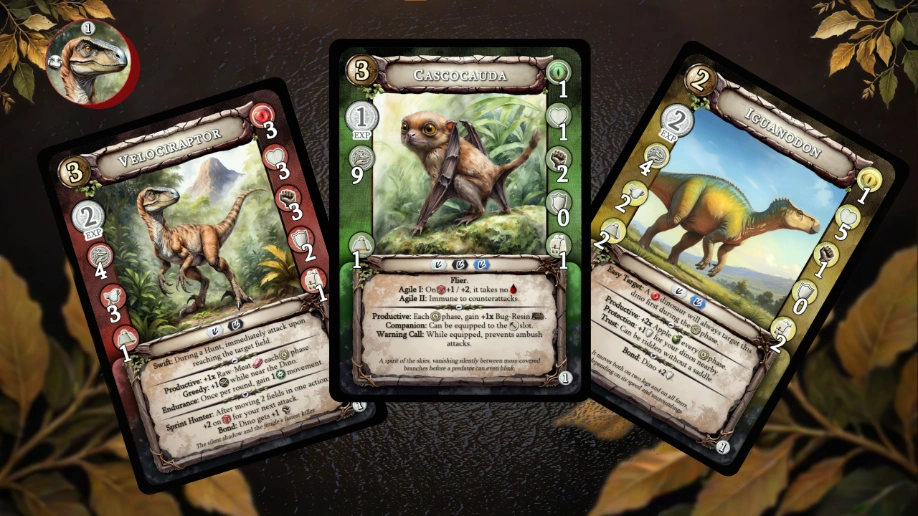
I could tell you a lot more, but that would go beyond the scope here. My advice to any new designer is: Use a professional component tool like Dextrous, test your game on the PC in TTS or other software to save time and material, and always write down every single idea you have.
Gil: These are great tips Andrej, thanks for sharing! I feel like I’ve got a glimpse into a very efficient prototyping workflow there. To finish up, I want to dig a bit more into the motivational side of things. Can you give us some more details about your game and its trajectory? What motivates you as a designer and how will you know you’ve ‘succeeded’ with this game?
Andrej: When I first started developing Jurassic Crisis, my main focus was always to share it with as many people as possible, to let them feel the same thrill and excitement at the table that I had when I played ARK: Survival Evolved. My first motivation was very personal: I wanted to be creative and productive again. The second was to see people actually playing it and having fun, because even as a child I loved that feeling, watching others enjoy something I had created.
The game has gone through so many stages: countless tests, changes, and improvements, both graphical and mechanical. When I first presented it at a convention in its very early days, people stopped to look. They didn’t even know exactly how it played yet, but visually it was already an eye-catcher. Then a well-known editor from a big German publisher sat down to try it. I was so nervous, you wouldn’t believe it. He tested a few situations quickly and told me it wouldn’t work. His exact words were: ‘Giving players five actions and then passing the turn, that’s just not done anymore.’ He criticized it heavily and left. 😄
Gil: Wow yep, brutal. We’ve all been there for sure. What happened next?
Andrej: When I got back home I was frustrated, honestly. I put the prototype in the corner for a while. But eventually I realized his critique, although harsh, was valuable. I experimented with other approaches, and to my surprise, it actually worked much better. Over time I even started to appreciate criticism. I stopped taking it personally and began to see it as a kind of ‘friend’ that helps me view the game from another perspective, not just my own. Without that mindset, Jurassic Crisis would never have reached the point where I felt ready to share it with the world.
.webp)
When publishers either declined or were overwhelmed with submissions, I finally decided to publish it myself in 2025. I launched the pre-campaign on Gamefound, and in the very first week we celebrated more than 2,500 followers. That feeling, that so many people were already interested, was pure success for me. It felt like planting a seed that suddenly cracked open and began to grow.
Now my job is to water that seed every day, to nurture it. And from there, the community (the tree) will grow on its own. And honestly, I love that little seed. ^^
Gil: That’s quite an amazing origin story! It’s such a tricky line to walk between accepting harsh feedback, and staying motivated, and sifting the good advice from the bad right. Good news is you got that seed into the ground and now it sounds like the tree is only going to keep growing from this point. So tell me, when and where is Jurassic Crisis coming out? And how can people find you now if they want to get involved in testing?
Andrej: Jurassic Crisis is currently live on Gamefound, and I’m involving the community heavily in its development. Players can comment, share feedback, and even suggest new ideas. We also run polls and have some special opportunities where the most engaged fans can actually be immortalized in the game. 😃 The community is growing steadily, and everyone is welcome to join and help shape the journey.
The full campaign is planned to go live in Q2 2026, where we’ll let the ‘fruit’ of all this work and feedback finally grow with your help.
You can find me on Instagram under @sperlingspiele, on BGG, and of course on Gamefound under Jurassic Crisis. In every update there’s also a link to our Discord, join in, message me, and we can organize a play session together on Tabletop Simulator so you can experience the game live.
Gil: Ok, exciting times! We’ll be sure to check that out. Andrej, thanks so much for joining me and for sharing such insightful wisdom about the journey you’ve been on. It’s really inspiring!
Andrej: Thank you so much, Gil! I really appreciate the opportunity to share my story and journey with everyone. It’s been such a pleasure chatting with you, and I’m excited for readers to see the game and all the work behind it. 😃